Treatment · Venous
Varicose Vein Treatment
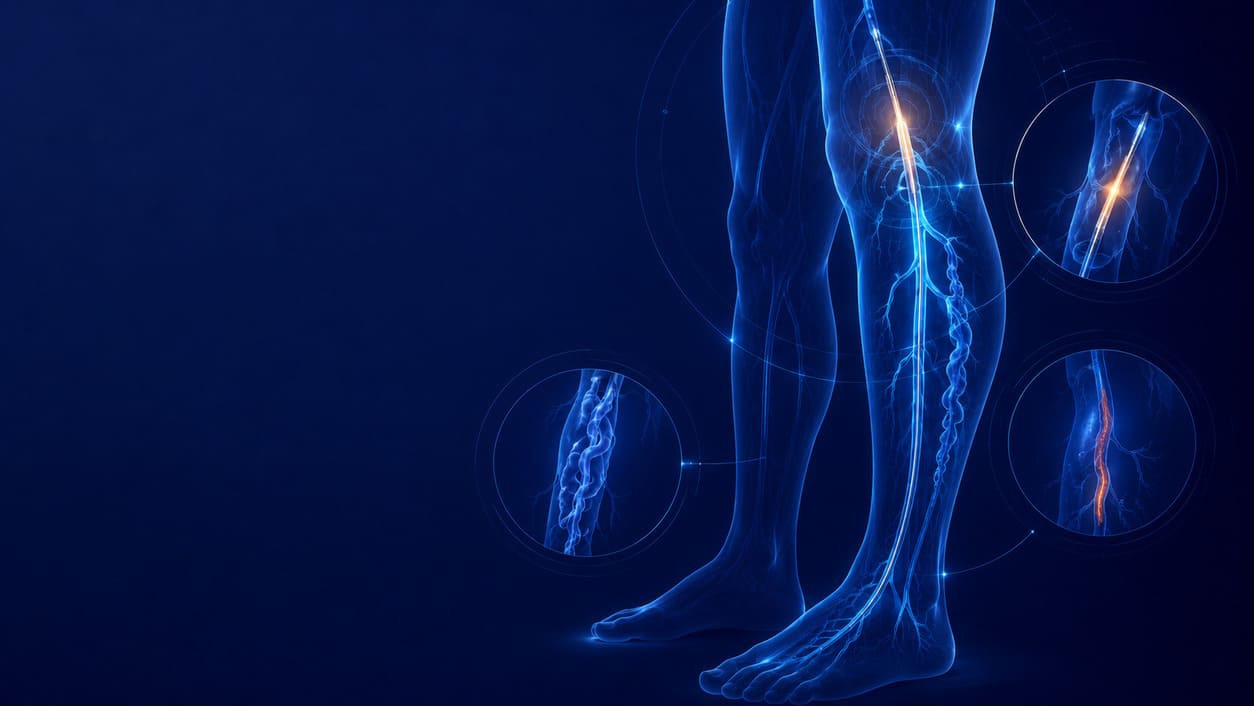
Refluxing leg veins are closed from the inside with laser, medical adhesive or foam. The vein is treated through a needle puncture, and you walk out of the department the same hour.
Who it is for
Treatment is offered when duplex ultrasound confirms reflux in the great or small saphenous vein and you have symptoms — aching, heaviness, swelling by the end of the day, night cramps, skin discolouration at the ankle, or a healed or open venous ulcer.
Visible veins alone are treated too, but the underlying reflux is closed first; otherwise the surface veins return. Which technique is used — laser, cyanoacrylate adhesive or foam sclerotherapy — is decided from the anatomy on your own scan.
Risks and alternatives
Possible risks
Pain, bruising, skin staining or numbness can follow vein treatment. Infection, nerve injury and a deep vein clot are less common; new varicose veins may develop later.
Other options
Symptom measures and compression when appropriate, foam sclerotherapy, a different endovenous method or surgery after duplex ultrasound assessment.
Clinical source: NHS
How the procedure works
Mapping
The refluxing segments are marked on the skin under ultrasound while you stand, so the plan matches the veins under load.
Access
A needle puncture and, for thermal techniques, local anaesthetic infiltrated along the vein. No cuts and no stitches.
Closure
A laser fibre, adhesive or foam is delivered along the vein under continuous ultrasound view until the segment is sealed.
Recovery
You walk immediately. Compression stockings for a short period, and normal daily activity from the same day.
Compared with stripping surgery
| Aspect | Endovenous closure | Vein stripping |
|---|---|---|
| Incision | Needle puncture | Groin incision and avulsions |
| Anaesthesia | Local | General or spinal |
| Hospital stay | Day case | Often overnight |
| Walking | Immediately | After the anaesthetic wears off |
| Return to work | 1–2 days | 1–3 weeks |
General guidance only. Suitability, benefit and risk are assessed individually from your own imaging.
Questions patients ask
Which technique will be used on me?
It is decided from your duplex scan: vein diameter, depth, tortuosity and how close the vein runs to skin and nerves. Adhesive avoids tumescent anaesthesia; laser has the longest published follow-up.
Do I have to wear compression stockings?
Usually for a short period afterwards, and the duration depends on the technique and the size of the vein. You are told before you travel, so you can bring a pair with you.
Will the veins come back?
The treated vein is permanently closed. New varicose veins can appear over the years in other segments; a yearly duplex scan detects them while treatment is still simple.
Can both legs be done in one visit?
Often yes, in the same session or on consecutive days. It is planned in advance so your stay is not extended.
Are spider veins treated as well?
Cosmetic sclerotherapy is done after the underlying reflux is closed, usually several weeks later, and may need more than one session.