Understanding the treatment
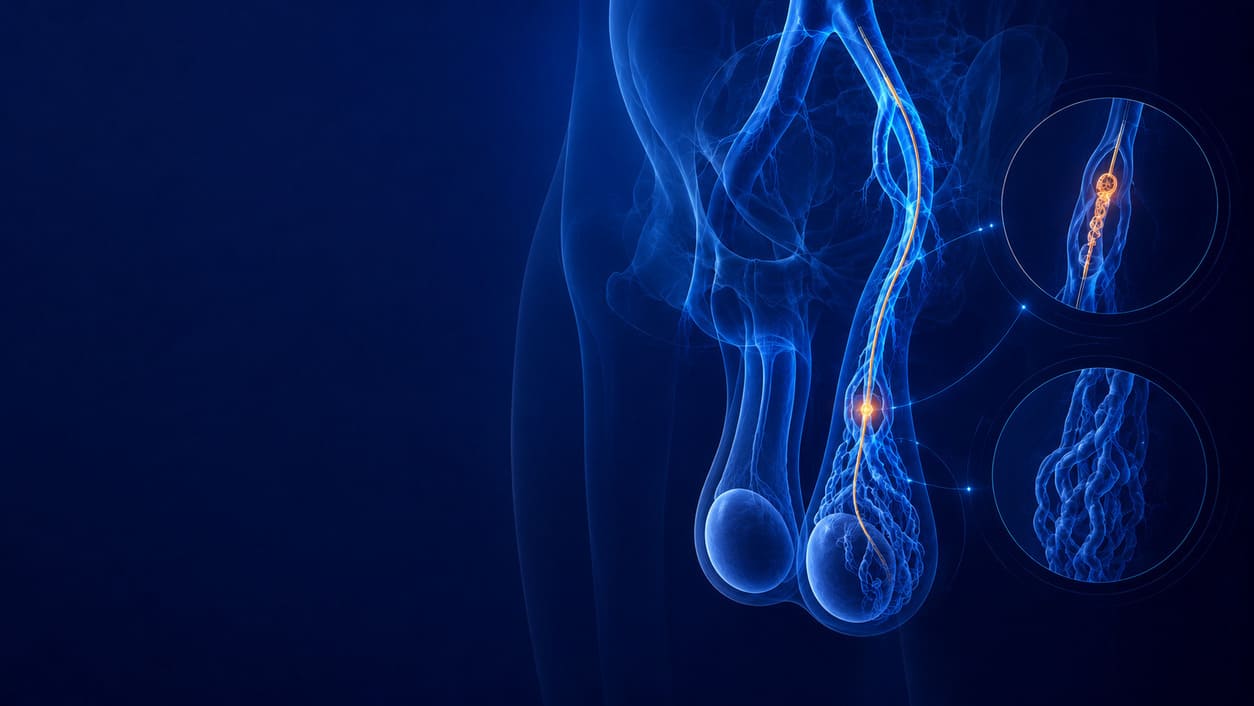
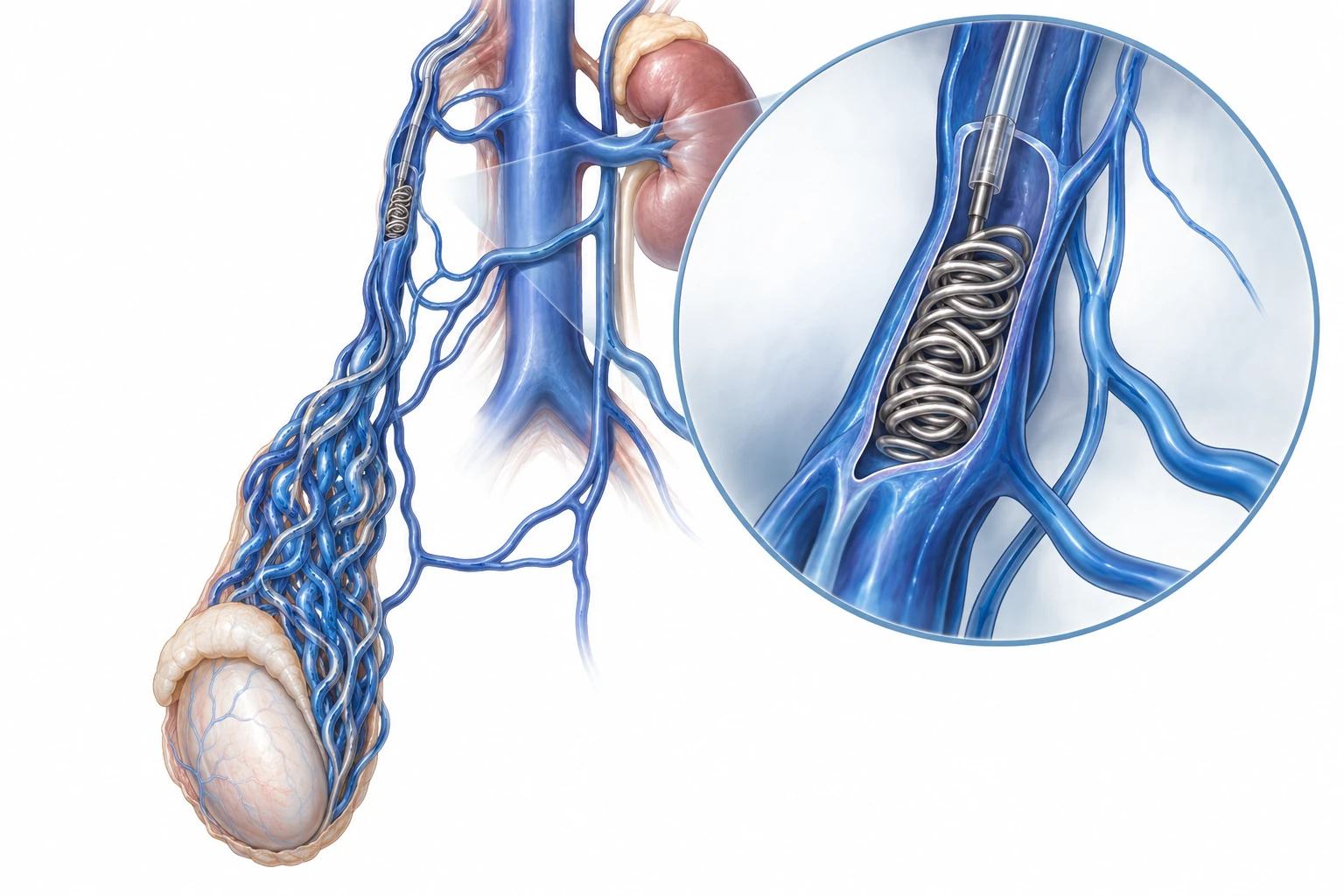
A varicocele is an enlargement of veins draining the testicle. Embolization closes selected refluxing veins from inside a blood vessel. Blood can then use other drainage pathways. The aim may be relief of persistent discomfort or improvement in semen findings in selected patients. Sources and further reading
Is it appropriate for me?
What the assessment considers
An examination and Doppler ultrasound help establish whether the varicocele fits your symptoms. When fertility is the concern, semen results and the couple’s wider fertility assessment matter as well.
When another approach may be better
A scan finding alone does not mean treatment is needed. Other causes of scrotal pain should be considered. Mild symptoms may be observed; embolization and surgical repair each have advantages and limitations.
Share your symptoms and existing reports so the next step can be considered in context. Sending records does not commit you to a procedure.
Send imaging for reviewOptions and expected benefit
Pain relief, vein closure and fertility are different outcomes. A technically successful procedure does not guarantee pregnancy or complete pain relief. Persistent or recurrent veins can require further assessment.
Options to discuss
- Observation
- Embolization
- Microsurgical or other surgical repair
Observation when symptoms are mild, or surgical repair after a fertility and urology assessment.
The relevant comparison depends on your diagnosis and goals. A smaller access puncture does not, by itself, establish which treatment is best for you.
Preparing for assessment
Send existing records if you have them. You do not need to arrange a new scan simply to start an enquiry; the team can explain what further assessment may be needed.
- Scrotal Doppler ultrasound report
- Semen analysis, if performed
- Previous operative notes, if any
- Current medication list
Include previous procedures, relevant medical conditions, allergies and your current medicines. Tell the team about blood-thinning medicines and any possibility of pregnancy. Do not stop medication or change eating and drinking instructions based on a website: obtain your individual preparation plan.
How the procedure works
Plan the procedure
The team reviews the diagnosis, imaging and treatment goals, explains alternatives and agrees the proposed technique with you.
Image-guided access
Imaging guides a catheter or needle to the selected treatment area. Local anaesthesia and any additional pain relief or sedation are discussed beforehand.
Treat the selected target
Catheter closes selected vein. The technique and materials depend on the treatment plan and imaging findings.
Observation and discharge planning
The team monitors recovery and decides when discharge is appropriate. You receive individual instructions for pain relief, activity and follow-up.
Before consent, discuss the proposed technique, pain relief, material or device choices, possible complications and what happens if the planned procedure cannot be completed.
Recovery and follow-up
Discuss scrotal discomfort, activity and return to work before discharge. Review may include symptoms, ultrasound or repeat semen testing, depending on the original treatment goal. Fertility changes are assessed over months rather than immediately.
Before discharge, ask for written instructions, a contact route and a follow-up plan. Return to work, exercise and travel should be agreed for your circumstances. Patients travelling to İzmir should plan enough time for assessment and recovery before booking fixed return arrangements.
Planning assessment and travel from abroadRisks and when to seek help
Temporary discomfort, bruising, minor bleeding or infection can occur. Rarely, an embolic coil or liquid may move; the varicocele can persist or recur and further treatment may be needed.
Ask the treating team to explain which symptoms are expected and which need urgent assessment after your particular procedure. Severe or rapidly worsening symptoms, heavy bleeding, chest pain or difficulty breathing require urgent medical help. Do not wait for a website review or a WhatsApp reply in an emergency.
Your consent discussion and discharge instructions take precedence over this general information.
Approach to treatment decisions
Symptoms, imaging, alternatives and your priorities all matter. An assessment may lead to observation, further tests, another specialist opinion or a discussion of treatment.
How I decide whether a procedure is appropriate
Symptoms, imaging, the evidence and your priorities all inform the recommendation. My decision framework explains how I consider these together, including when observation or another treatment may be more appropriate.
See my approach to treatment decisionsQuestions patients ask
How is suitability assessed?
An examination and Doppler ultrasound help establish whether the varicocele fits your symptoms. When fertility is the concern, semen results and the couple’s wider fertility assessment matter as well.
When might a procedure be unnecessary?
A scan finding alone does not mean treatment is needed. Other causes of scrotal pain should be considered. Mild symptoms may be observed; embolization and surgical repair each have advantages and limitations.
What benefit can I realistically expect?
Pain relief, vein closure and fertility are different outcomes. A technically successful procedure does not guarantee pregnancy or complete pain relief. Persistent or recurrent veins can require further assessment.
What does follow-up involve?
Discuss scrotal discomfort, activity and return to work before discharge. Review may include symptoms, ultrasound or repeat semen testing, depending on the original treatment goal. Fertility changes are assessed over months rather than immediately.
What records should I send?
Scrotal Doppler ultrasound report; Semen analysis, if performed; Previous operative notes, if any; Current medication list. Send existing records first; further tests can be discussed after review.
Does a successful embolization guarantee pregnancy?
No. Closing a refluxing vein and achieving pregnancy are different outcomes. Semen findings, the partner’s fertility and other factors are considered together; a fertility assessment remains important.
Can a varicocele that returns after surgery be assessed?
Yes. Previous operative notes and current imaging help explain the recurrent veins. The choice between observation, another surgical approach and embolization depends on the findings, symptoms and goals.
Does sending records commit me to treatment?
No. Reviewing records may lead to further assessment, observation or another specialist opinion. Any procedure requires a separate discussion and informed consent.
Expertise and sources
Responsible physician: Mehmet Hakan Pıçak, MD, interventional radiologist in İzmir, Türkiye.
The responsible physician identifies the practice specialist. It does not, by itself, certify medical review of this text. A medical-review date is shown only when a documented review matches this content version.
Sources provide background; an overseas guideline is not a statement of local regulation. This page is general information and cannot determine your diagnosis or suitability.
Related reading
Understanding the cost
Request a written estimate after your records have been assessed. Ask what is included for the procedure, materials, hospital care and follow-up, and which additional tests or treatments would be separate.
Contact the practice about an estimate