Treatment · Musculoskeletal
Genicular Artery Embolization
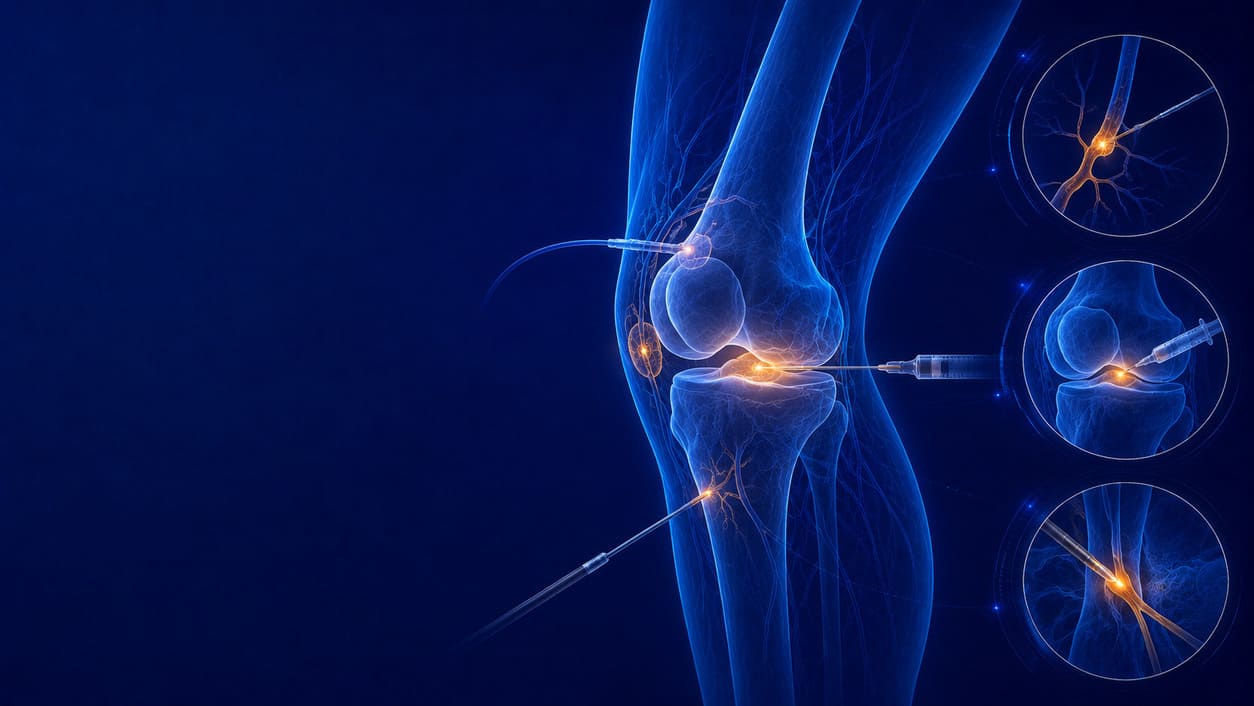
Knee osteoarthritis pain is reduced by closing the abnormal small arteries that feed inflamed joint lining, through a puncture at the groin or ankle. No implant, no joint surgery.
Who it is for
GAE is considered for knee pain lasting more than six months despite physiotherapy, weight management, analgesia and injections, in patients with mild to moderate osteoarthritis who are not candidates for joint replacement — or who wish to postpone it.
It treats pain, not joint geometry: cartilage loss is not reversed. Patients with advanced bone-on-bone disease are usually better served by arthroplasty, and that is said plainly at the review rather than after you have travelled.
Risks and alternatives
Possible risks
Bruising, bleeding, altered skin sensation or unintended blockage of a normal vessel can occur. Long-term safety and benefit remain uncertain.
Other options
Tailored exercise, weight management when relevant, pain medicines or injections where suitable, and joint replacement assessment for severe disease.
NICE considers the evidence on benefit and long-term safety insufficient and recommends this procedure only in a research setting in the UK. Any proposal here needs an individual discussion of this uncertainty.
Clinical source: NICE
How the procedure works
Access
Local anaesthetic at the groin or ankle, then a catheter is advanced to the arteries around the knee.
Mapping
Angiography identifies the hypervascular areas that correspond to the site where you feel pain.
Embolization
Microspheres reduce the abnormal blood supply to the inflamed synovium while normal circulation is preserved.
Recovery
Two to four hours of observation. Walking the same day, with a small dressing at the puncture site.
Compared with knee replacement
| Aspect | Embolization | Knee replacement |
|---|---|---|
| Incision | 2 mm puncture | Open joint surgery |
| Anaesthesia | Local | General or spinal |
| Implant | None | Prosthesis |
| Hospital stay | Day case | 3–5 nights |
| Rehabilitation | Days | 6–12 weeks |
General guidance only. Suitability, benefit and risk are assessed individually from your own imaging.
Questions patients ask
When does the pain improve?
Some patients notice a change within the first weeks; for others it builds over three months. The same pain score is recorded before and after, so the response is measured rather than guessed.
Does it repair the cartilage?
No. Embolization reduces inflammation and the pain that comes with it. Structural damage remains, which is why the degree of arthritis decides whether it is offered at all.
Can I still have a knee replacement later?
Yes. GAE does not alter the joint and does not complicate future arthroplasty.
Is it suitable for both knees?
Both can be treated, usually on separate days, and your stay is planned to cover them.
What are the main risks?
Temporary skin discolouration or numbness over the treated area, and bruising at the puncture site, are the most frequently reported. Everything relevant to your case is discussed before consent.