Treatment · Women's health
Uterine Fibroid Embolization
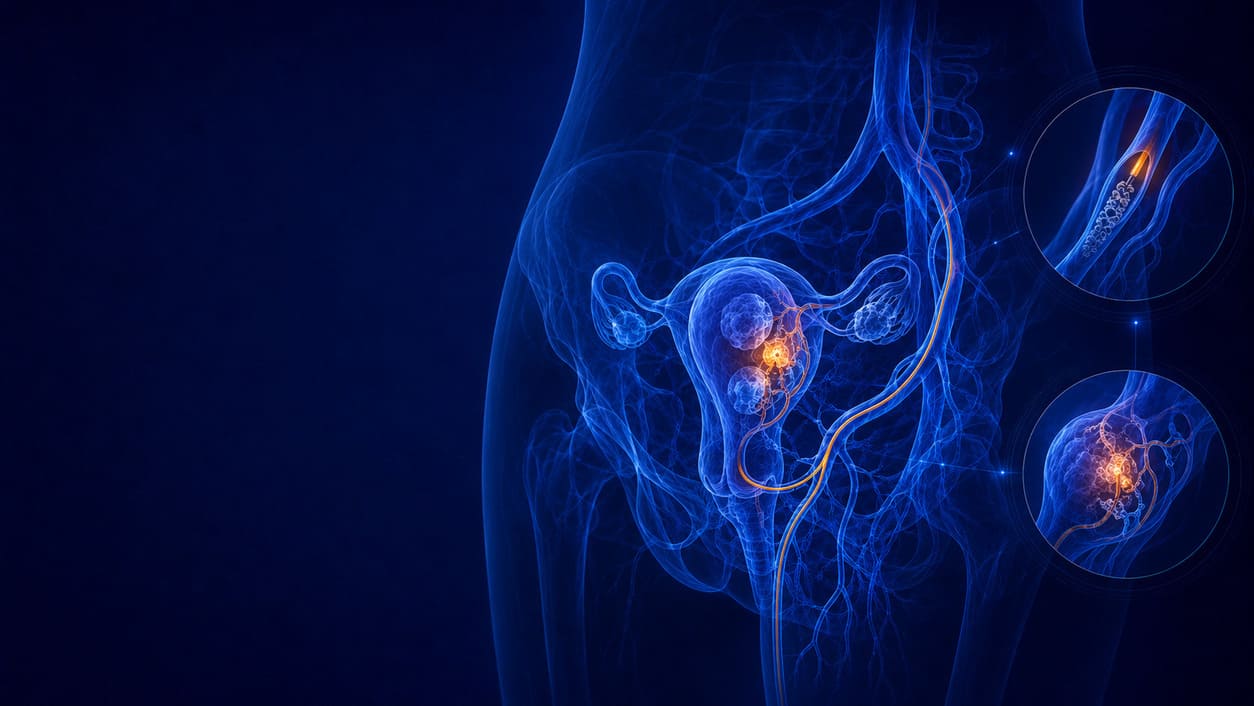
Fibroids are treated by closing the arteries that feed them, through a puncture at the wrist or groin. The uterus is preserved and there is no surgical incision.
Who it is for
UFE is considered for symptomatic fibroids — heavy or prolonged periods, pelvic pressure, frequent urination, pain during intercourse, or anaemia caused by blood loss — confirmed on ultrasound and, ideally, contrast MRI.
It is often chosen by women who wish to avoid hysterectomy or myomectomy, or for whom surgery carries added risk. Suitability depends on the number, size, position and blood supply of the fibroids, all of which are read from your own imaging.
Risks and alternatives
Possible risks
Cramping and pain are common after treatment. Bleeding, infection, artery or uterine injury, ovarian injury or early menopause can occur. The effect on a future pregnancy is uncertain; a rare cancer mistaken for a fibroid could be diagnosed late.
Other options
Medication, myomectomy or hysterectomy, depending on symptoms, fibroid anatomy and pregnancy plans. Discuss fertility goals with a gynaecologist before deciding.
Clinical source: ACOG
How the procedure works
Access
Local anaesthetic at the wrist or groin, then a fine catheter is guided into the uterine arteries. Light sedation is available.
Mapping
Angiography shows the arteries supplying each fibroid, and any connection to the ovarian circulation.
Embolization
Calibrated microspheres block the fibroid vessels, while normal uterine muscle keeps its supply through collateral flow.
Recovery
Pain relief is given for the cramping that follows. Most patients stay one night and are discharged the next morning.
Compared with hysterectomy
| Aspect | Embolization | Hysterectomy |
|---|---|---|
| Incision | 2 mm puncture | Abdominal or laparoscopic |
| Anaesthesia | Local + sedation | General |
| Uterus | Preserved | Removed |
| Hospital stay | 1 night | 2–4 nights |
| Return to work | 5–10 days | 4–6 weeks |
General guidance only. Suitability, benefit and risk are assessed individually from your own imaging.
Questions patients ask
Will I still be able to conceive?
Pregnancy after UFE is documented, but embolization is not primarily a fertility treatment. If you are planning a pregnancy this is discussed in detail beforehand, and myomectomy may be the better option for you.
How painful is the recovery?
The first twenty-four hours bring cramping similar to a strong period, controlled with medication. It settles quickly, and most patients are comfortable well before they fly home.
Do the fibroids come back?
Treated fibroids shrink and do not regrow. New fibroids can develop in later years, as they can after myomectomy; control imaging at six months establishes your baseline.
Will my periods change?
Bleeding usually reduces over the first two or three cycles. Periods otherwise continue as normal unless you are already close to menopause.
Is contrast MRI necessary?
It is strongly preferred. MRI distinguishes fibroids from adenomyosis and shows the blood supply, which is what determines whether embolization will help you.